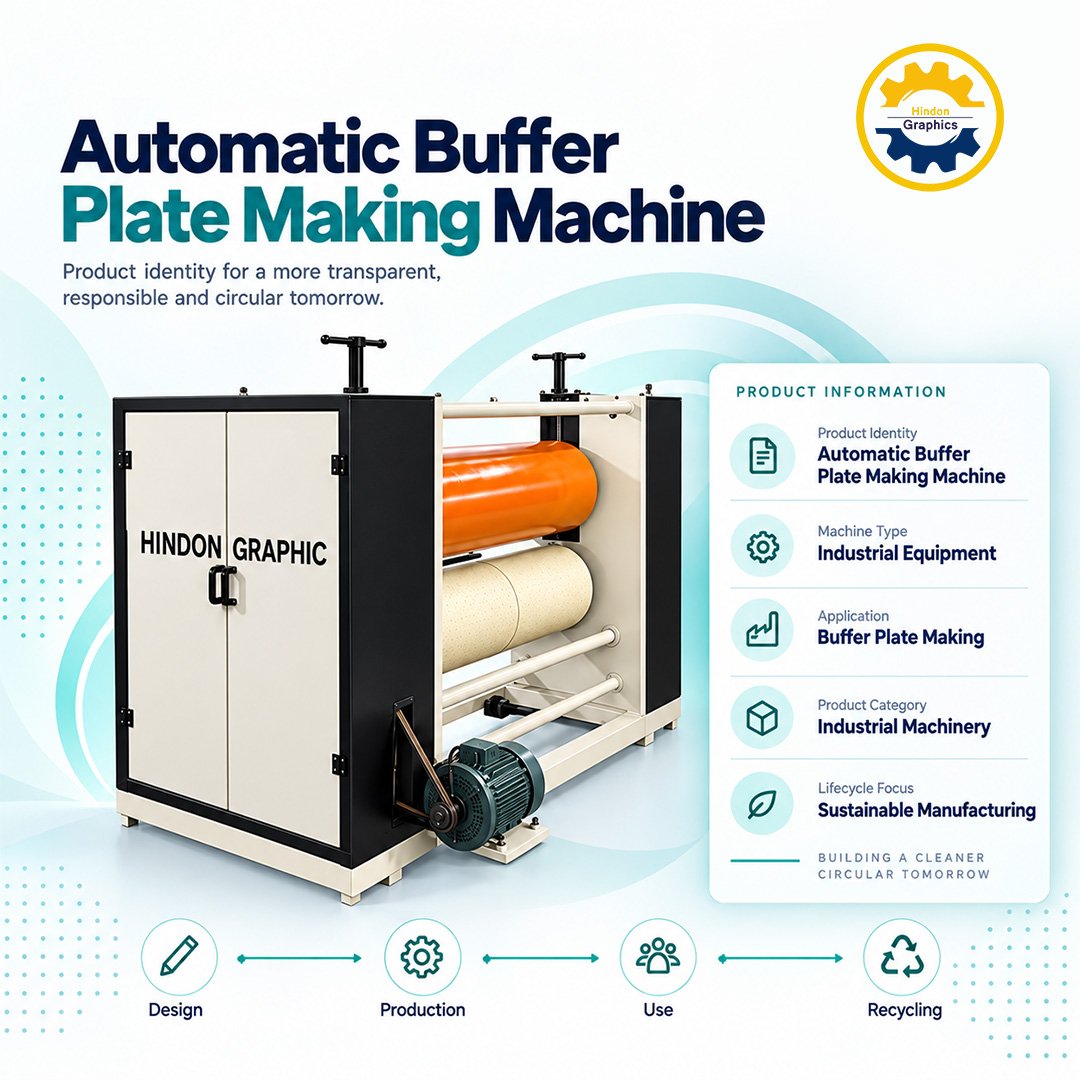
Cutting is an important stage in paper plate manufacturing because the shape and dimensions of the blank influence the next production steps. A properly prepared circular blank can help maintain a consistent plate profile, support smoother moulding and reduce avoidable handling during production. Hindon Graphics provides paper plate manufacturing equipment, including solutions for circle cutting applications, to support businesses involved in disposable paper product manufacturing. The Buffer Plate Circle Cutting Machine is designed for cutting paper material into circular blanks used in paper plate production. It can be considered by manufacturers who want a dedicated cutting stage rather than relying entirely on manual blank preparation. The appropriate machine configuration depends on the paper material, required blank diameter, production target and the operating process followed by the unit. As a manufacturer of Disposable items & paper plate Making Equipment and packaging machines, Hindon Graphics serves businesses looking for machinery suited to different stages of disposable product manufacturing. Selecting the right cutting equipment starts with understanding the products being made and the material being processed. Paper Plate Counting Machine
How a Circle Cutting Machine Supports Paper Plate Production
Paper plate production involves more than shaping a finished plate. Before forming can take place, the raw material must be prepared in a suitable size and shape. For round plates, circular blanks are commonly used as the starting material for the forming stage. A circle cutting machine helps organise this preparation step. Instead of preparing each blank through a separate manual process, operators can use dedicated cutting equipment according to the machine's design and feeding method. The cut blanks can then be collected, checked and transferred to the next stage. The actual output depends on several factors, including the paper's thickness, material characteristics, blank diameter, cutting arrangement, operator handling and the machine model. Manufacturers should assess these factors before selecting a machine for their facility.
1. Circular Blank Preparation
- The machine's primary purpose is to produce circular paper blanks for the intended plate size. The cutting arrangement should be suitable for the required diameter and material. Before purchasing, confirm the available cutting sizes and whether tooling changes are needed for different products.
- 2. Consistent Cutting Results
- Uniform blanks make the next production stage easier to manage. A suitable cutting setup can help maintain repeatable dimensions when the material is fed and processed correctly. Actual cutting consistency should be evaluated against the manufacturer's specifications and a sample production trial.
- 3. Material Feeding and Handling
- The feeding method influences how paper is presented to the cutting mechanism. Depending on the design, material handling may involve manual positioning or a more organised feeding arrangement. Operators should follow the recommended loading procedure to avoid misalignment and unnecessary material waste.
- 4. Operator Access and Controls
- Accessible controls and a clear operating sequence help operators understand how to start, run and stop the equipment. The control layout, safety provisions and adjustment process should be reviewed during installation and training.
Better Control Over Blank Dimensions
- Using dedicated cutting equipment gives manufacturers a defined process for preparing circular blanks. This is useful when a production line requires a consistent blank size for a particular plate design. The achievable tolerance should be confirmed for the selected machine and material.
- More Organised Production
- Separating blank preparation from plate forming can make the workflow easier to schedule. Operators can monitor material input, finished blanks and rejected pieces at the cutting stage instead of handling all preparation tasks within the forming operation.
- Opportunity to Manage Material Waste
- Paper usage is an important consideration in disposable product manufacturing. Correctly planned blank dimensions, appropriate material positioning and routine inspection can help control avoidable waste. Actual savings depend on the paper layout, product size, cutting method and operator practices.
- Support for Different Production Requirements
- Businesses may manufacture plates in more than one diameter or style. When multiple sizes are required, confirm whether the machine supports size changes and what cutting tools, adjustments or additional equipment may be necessary. Not every configuration automatically accommodates every plate size.
Applications of a Buffer Plate Circle Cutting Machine
- This type of equipment is relevant to businesses that prepare circular paper blanks for disposable plate production. Potential applications include:
- Paper plate manufacturing units
- Disposable paper product production facilities
- Small and medium-sized paper plate businesses
- Larger manufacturing units that require a separate blank preparation stage
Materials and Production Planning
- The material used for paper plate production can affect how the cutting process performs. Paper thickness, stiffness, coating, surface condition and the way the material is supplied should all be considered before machine selection. A setup suitable for one material may require different adjustments for another.
It is also important to plan the relationship between cutting output and the capacity of the next production stage. If the cutting operation prepares blanks faster than the forming machine can process them, material may accumulate and require extra storage or handling. If cutting output is too low, the forming stage may experience interruptions.