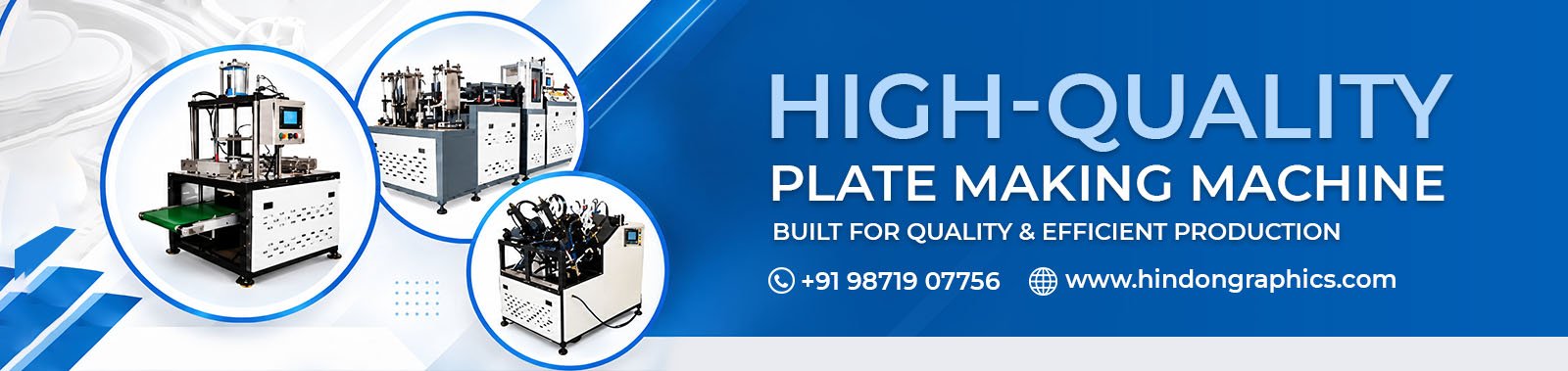
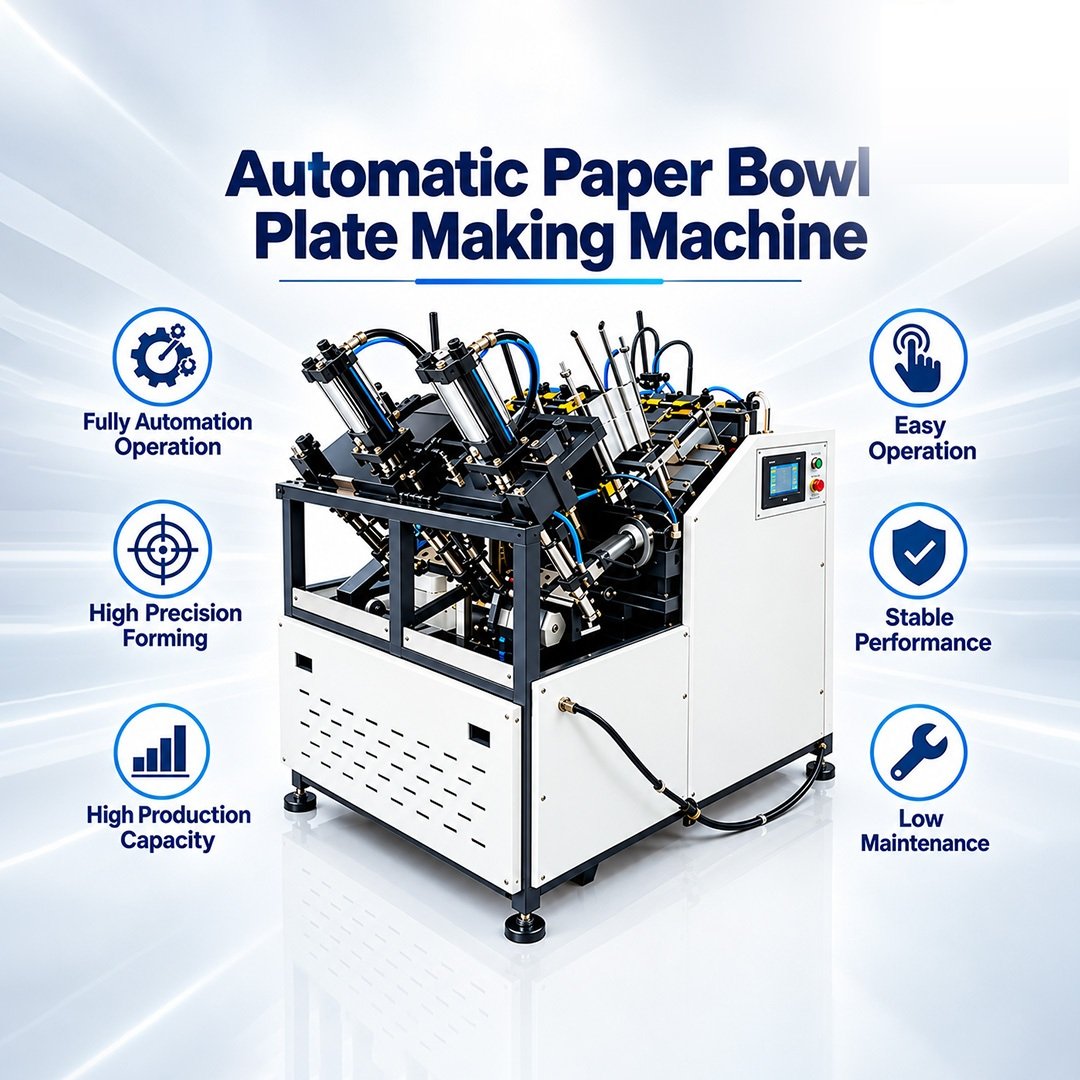
Paper bowls and paper plates are widely used by restaurants, takeaway counters, caterers, food vendors and disposable tableware suppliers. For manufacturers serving these markets, choosing the right production equipment is important for managing order quantities, product sizes and day-to-day manufacturing activities. Hindon Graphics manufactures Disposable items & paper plate Making Equipment and packaging machines, including machinery for paper plate, paper bowl, cutting, counting and packaging applications. Our product range caters to businesses looking for equipment suited to different disposable-product manufacturing requirements. An Automatic Paper Bowl Plate Making Machine can help manufacturers organise repetitive production operations and reduce the manual effort involved in forming paper products. The appropriate machine configuration depends on the bowl or plate design, raw material, mould dimensions and expected production volume. Buffer Plate Circle Cutting Machine
One Machine Setup for Paper Bowl and Plate Production
Paper bowls and paper plates are available in different sizes and shapes to suit different serving requirements. A manufacturer may need small bowls for snacks, deeper bowls for food portions, or plates for catering and takeaway services. Production requirements therefore need to be considered before selecting machinery. The mould, forming mechanism and machine configuration must be suitable for the products being manufactured. An Automatic Paper Bowl Plate Making Machine is designed to support automated forming operations for compatible paper products. Depending on its configuration, the equipment can help manufacturers manage repeated production cycles with less manual intervention. Businesses planning to manufacture both bowls and plates should confirm whether the selected machine supports both product types. In some cases, different moulds or separate machine configurations may be necessary. Rotary Circle Cutting Machine
How Automatic Paper Bowl and Plate Machinery Works
- The production process generally involves preparing suitable paper blanks or raw material, feeding the material into the machine, forming the product through the moulding mechanism and collecting the finished items.
- The exact sequence varies according to the machine design and the type of paper product being manufactured.
- A typical production workflow includes:
- Preparing the required paper material.
- Selecting the correct mould for the product.
- Feeding or positioning material according to the machine design.
- Forming the bowl or plate through the machine's operating mechanism.
- Checking the finished product for shape and consistency.
- Collecting and organising the completed products.
- Counting and packaging the output where required.
- Automation can make repeated forming operations easier to manage. However, product quality also depends on paper quality, mould condition, machine settings and operator supervision.
Applications of Paper Bowl and Plate Making Equipment
- Paper bowl and plate manufacturing equipment can serve businesses producing disposable tableware for different commercial requirements.
- Common market segments include:
- Restaurants and takeaway businesses
- Catering companies
- Food-service distributors
- Disposable tableware wholesalers
- Retail packaging suppliers
- Event and party supply businesses
- Paper product manufacturing units
- Institutional food-service suppliers
- The required product dimensions, paper grade and forming characteristics vary by application. Manufacturers should select suitable raw materials and confirm that their intended products are compatible with the machine.
Choosing the Right Machine for Your Business
- Before purchasing an automatic paper bowl and plate making machine, it is helpful to prepare a clear list of production requirements.
- Start with the products you plan to manufacture. A small snack bowl and a large serving plate have different forming requirements, so the mould dimensions must match the intended product.
- Next, estimate your expected production volume. This will help you compare available machine configurations and determine whether additional equipment may be needed for counting, stacking or packaging.
- Also consider the cost and availability of raw materials, the space available for installation, operator training and the maintenance arrangements required for regular production.
- For manufacturers intending to produce both bowls and plates, one important question is whether the same machine supports both formats or whether separate equipment is recommended. Confirming this before placing an order can prevent unnecessary investment.
Raw Material and Finished Product Quality
- Paper quality plays an important role in the final product. The paper must be suitable for the intended forming process and the end use of the bowl or plate. Incorrect material selection may affect forming, product stiffness, shape retention and finished appearance. Similarly, worn or unsuitable moulds can affect product dimensions.
Manufacturers should test the selected paper with the intended mould and operating settings before beginning large production runs. Products intended for direct food contact should use materials suitable for that application and comply with applicable requirements. Regular inspection during production can help identify forming defects early and reduce unnecessary material waste.